
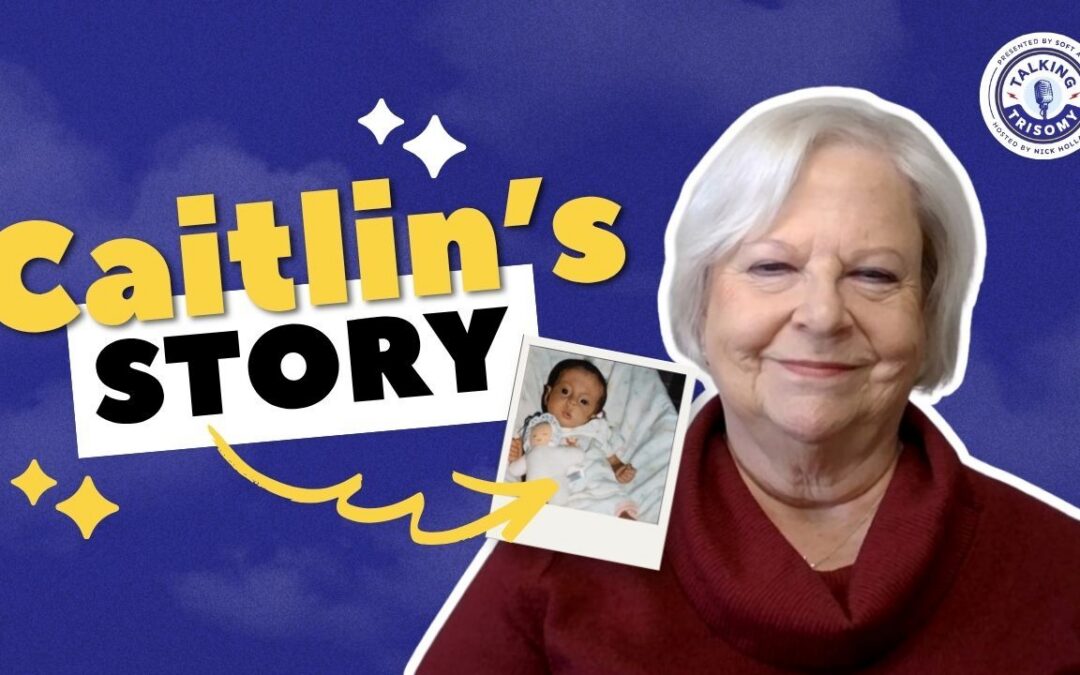
A Mother’s Journey with Trisomy 18, Edwards Syndrome, and the Importance of Support for Trisomy Families
Watch and Listen to Caitlin’s Story
We invite you to experience Nancy’s story in the format that works best for you. Whether you prefer watching the conversation or listening while driving, walking, or caring for your child, Caitlin’s journey offers encouragement, perspective, and meaningful support for families navigating Trisomy 18, also known as Edwards Syndrome.
A Story That Begins with Uncertainty and Grows with Love
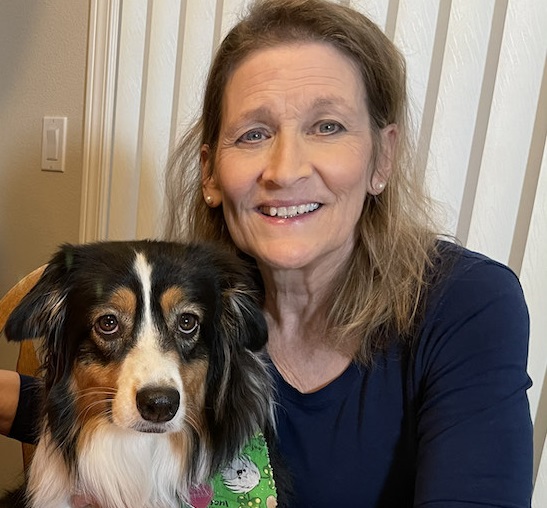
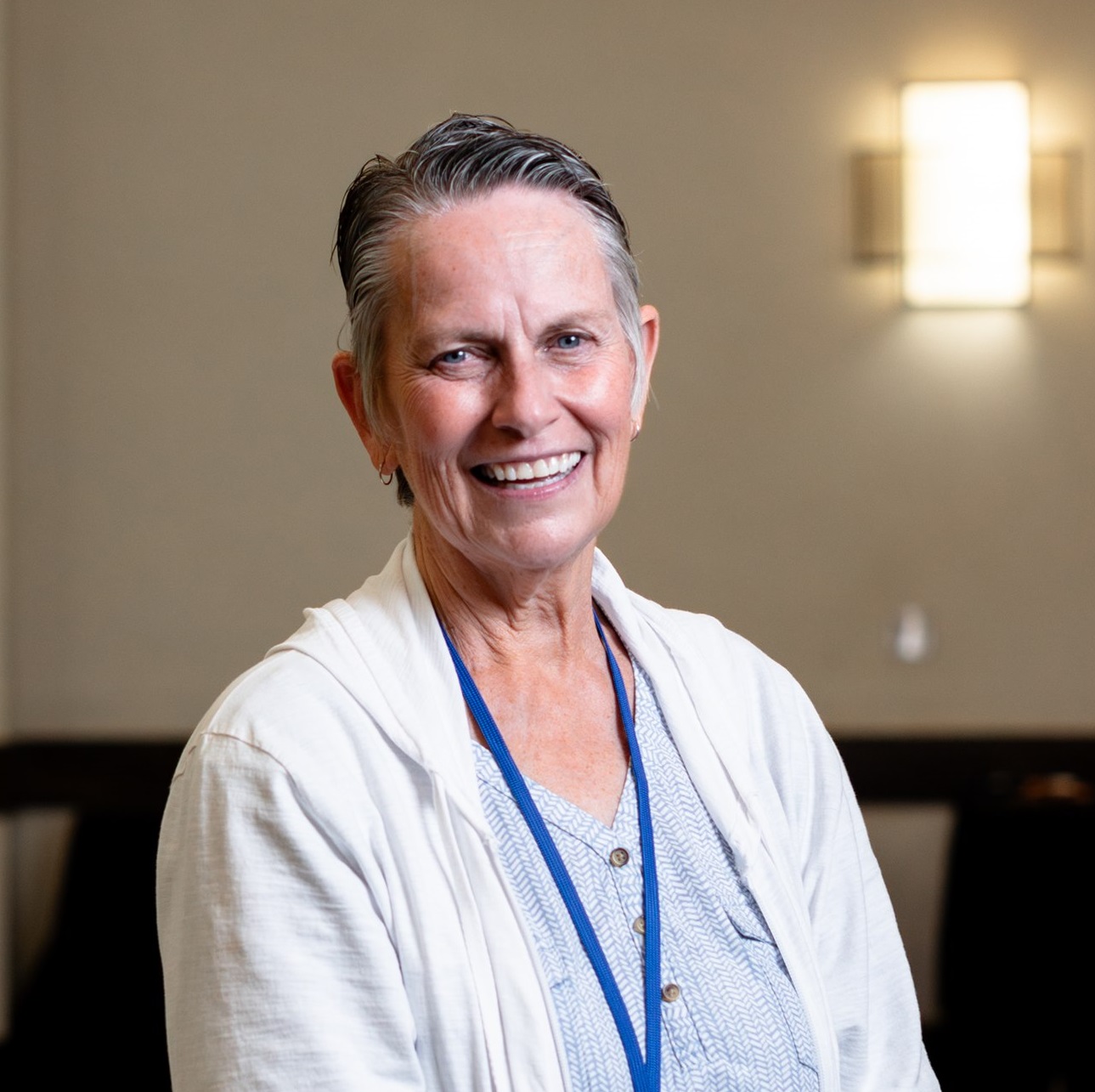
In this episode of the Talking Trisomy podcast, Nancy shares the story of her daughter Caitlin and the path her family has walked since receiving a diagnosis of Trisomy 18. Like many parents, Nancy remembers the early days as a time filled with questions, emotions, and difficult decisions. She also remembers the moment when hope began to grow as she connected with other families and medical professionals who helped guide her forward.
Families who receive a diagnosis of Trisomy 18 often find themselves navigating unfamiliar medical terminology, complex care decisions, and a wide range of emotions. Nancy’s story reminds us that while the diagnosis may feel overwhelming at first, families are not alone. With the right information and compassionate support, families can find confidence and clarity in their journey.
This conversation reflects not only the realities of medical care, but also the strength that develops through relationships, advocacy, and love.
Understanding Trisomy 18 and Edwards Syndrome
Trisomy 18, frequently referred to as Edwards Syndrome, is a genetic condition caused by the presence of an extra copy of chromosome 18. Children with Trisomy 18 may experience a range of medical and developmental challenges, and each child’s experience is unique. Some children require intensive medical care, while others reach milestones that families once thought were impossible.
For families seeking reliable medical information and practical guidance, we encourage you to visit our dedicated resource page:
Learn more about Trisomy 18 here:
https://trisomy.org/trisomy-18/
This resource provides clear, evidence informed information about medical care, developmental expectations, and family support. It is designed to help parents partner effectively with their healthcare team while remaining grounded in hope and realistic planning.
The Importance of Support for Trisomy Families
One of the strongest messages in Nancy’s story is the importance of connection. Families navigating a diagnosis of Trisomy 18 or Edwards Syndrome often benefit from connecting with other parents who understand the emotional and medical realities of the journey.
Support for trisomy families can take many forms. It may include emotional reassurance, practical guidance, shared experiences, or simply the presence of someone who listens without judgment. Parents who connect with experienced families frequently report feeling more confident in their decision making and more prepared to advocate for their child.
Support for trisomy families often includes:
Connecting with experienced parents who have walked a similar path
Learning how to communicate effectively with medical professionals
Finding trustworthy information and reliable resources
Sharing stories that celebrate each child’s life and impact
These connections are not just helpful. They are often transformative.
Read Caitlin’s Story in Her Family’s Own Words
For families who would like to learn more about Caitlin’s journey, Nancy has also shared a written story that reflects the day to day realities of raising a child with Trisomy 18. Personal stories provide a powerful reminder that behind every diagnosis is a child, a family, and a community of people who care deeply.
Read Caitlin’s full story here:
https://trisomy.org/wp-content/uploads/2026/04/Caitlins-Story.pdf
Stories like this help families feel less alone. They also help medical professionals and community members better understand the lived experiences of families navigating rare genetic conditions.
Resources for New and Expectant Parents
If you are expecting a child or have recently received a diagnosis of Trisomy 18 or Edwards Syndrome, you may be searching for guidance, reassurance, and practical next steps. That search is both natural and important.
Our Expectant Parent Resource Page was created specifically to support families during this time. It includes medical information, family stories, and connections to experienced parents who understand what you are going through.
Visit the Expectant Parent page here:
https://trisomy.org/expectant-parent
This resource is designed to help families feel informed, supported, and empowered as they navigate decisions about their child’s care.
Celebrating the Life and Legacy of Every Child
At the heart of this podcast episode is a simple but powerful message. Every child deserves to be seen, valued, and celebrated.
Caitlin’s story reflects the joy, challenges, and growth that come with raising a child with Trisomy 18. Nancy shares moments of uncertainty, but she also shares moments of laughter, pride, and deep connection. These experiences remind us that children with Edwards Syndrome are not defined solely by their diagnosis. They are sons and daughters, siblings and friends, and beloved members of their families and communities.
Stories like Caitlin’s help reshape how society understands rare genetic conditions. They promote compassion, encourage collaboration between families and healthcare providers, and strengthen the network of support that families rely on.
Listen, Share, and Help Another Family Feel Less Alone
Nancy’s story is a reminder that hope often grows through connection. By sharing her experiences, she offers encouragement to families who may feel uncertain or isolated after receiving a diagnosis of Trisomy 18.
We invite you to watch or listen to this episode of the Talking Trisomy podcast and share it with others who may benefit from hearing Caitlin’s story. Whether you are a parent, grandparent, medical professional, or friend, your willingness to share reliable information and compassionate support can make a meaningful difference.
Together, we can continue building a community grounded in knowledge, empathy, and strong support for trisomy families.















Recent Comments