"He Surprises You Every Time"
Meet Patrick and the Jerzyk Family
A Trisomy 9 family from Chicago shares their diagnosis story, life at Lurie Children's, and what Patrick has taught everyone around him
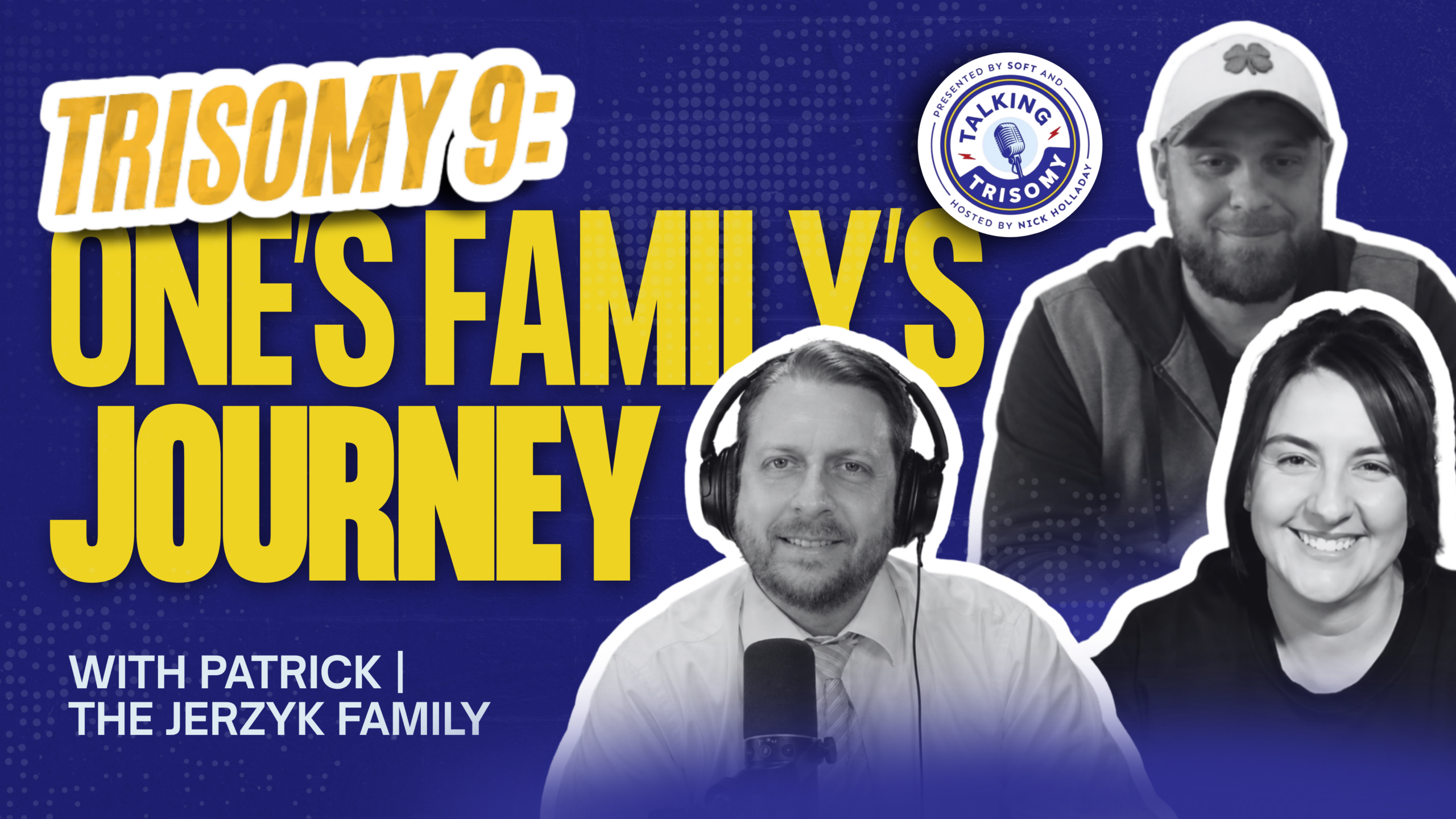
When Patrick Jerzyk was born in March 2020 — right as the world shut down for COVID — his parents Zach and Anna had no diagnosis, no roadmap, and no way to be in the hospital together. What they had was each other, two daughters at home, and a gut feeling that something was uniquely special about their son.
Patrick has Trisomy 9 (Partial Trisomy 9P) — a rare chromosome disorder in which there is an extra partial copy of the ninth chromosome. In this episode of the Talking Trisomy podcast, Zach and Anna sit down with SOFT President Nick Holladay for one of the most joyful, honest, and moving family conversations the podcast has ever had — including a surprise appearance from Patrick himself, along with big sisters Sophia and Ariana.
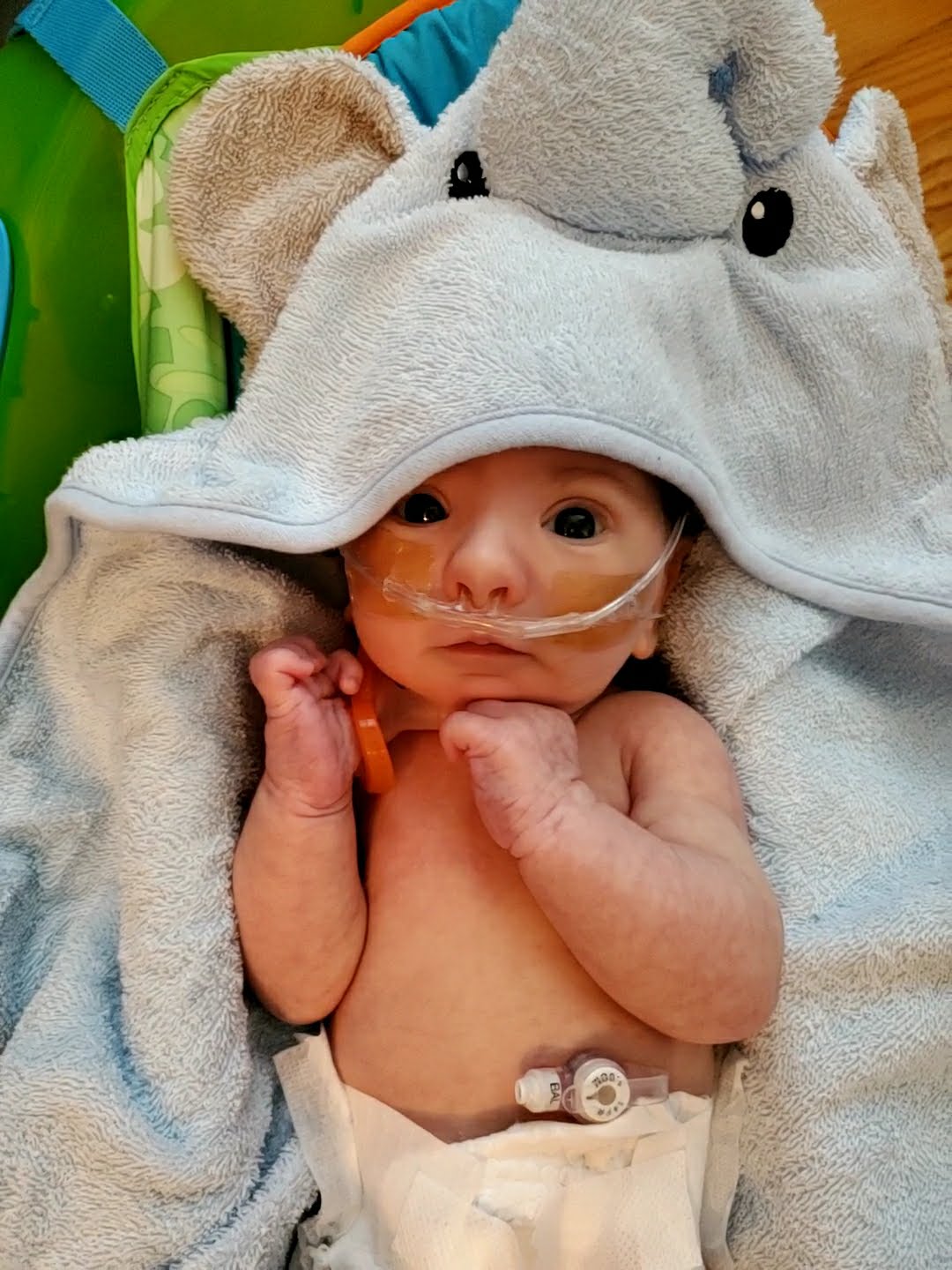
The Jerzyks live in the Chicago area and have been part of the SOFT community since Patrick's diagnosis. They attended the SOFT Annual Conference where Patrick — with his fleet of toy cars stuffed in his sweater pouch — became something of a star. As Nick put it on the podcast: "Patrick's got a little fame to him growing."
What Is Trisomy 9?
Trisomy 9 is a rare chromosome disorder caused by the presence of an extra copy — or partial extra copy — of chromosome 9. Like other trisomy conditions, it falls within the broader family of rare chromosome disorders supported by SOFT.
One thing that sets Trisomy 9 apart from Trisomy 18 (Edwards syndrome) and Trisomy 13 (Patau syndrome) is that the diagnosis is often made after birth rather than prenatally. Prenatal screening does not always flag it, which means many families — like the Jerzyks — learn about the condition in the days and weeks following delivery. Learn more about Trisomy 9 on the SOFT website.
Born During COVID With No Diagnosis — The Early Days
Patrick was born in March 2020, the same week that COVID lockdowns swept the country. Anna had been monitored throughout pregnancy for IUGR (intrauterine growth restriction), and while doctors noted a small opening in his heart — common in many newborns — everything else appeared average. But Anna had a gut feeling something was different, and she trusted it.
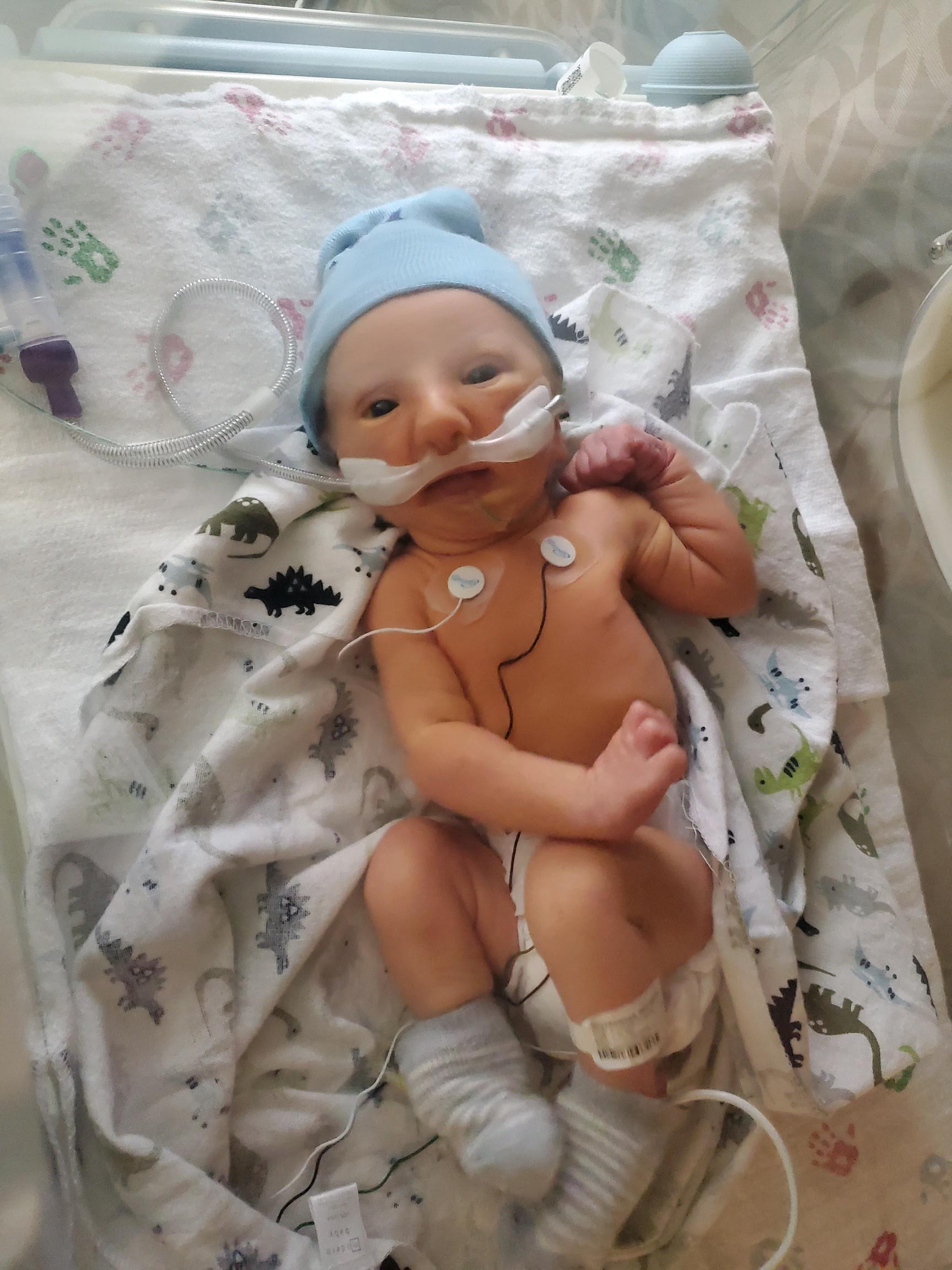
At birth, Patrick arrived sprawled out like a star — floppy, wide-eyed, with features Zach and Anna immediately knew were different. Within hours, his oxygen levels began dropping and he was moved to the NICU. The family was at Northwestern Hospital in Chicago. COVID restrictions meant only one parent could be in the building at a time.
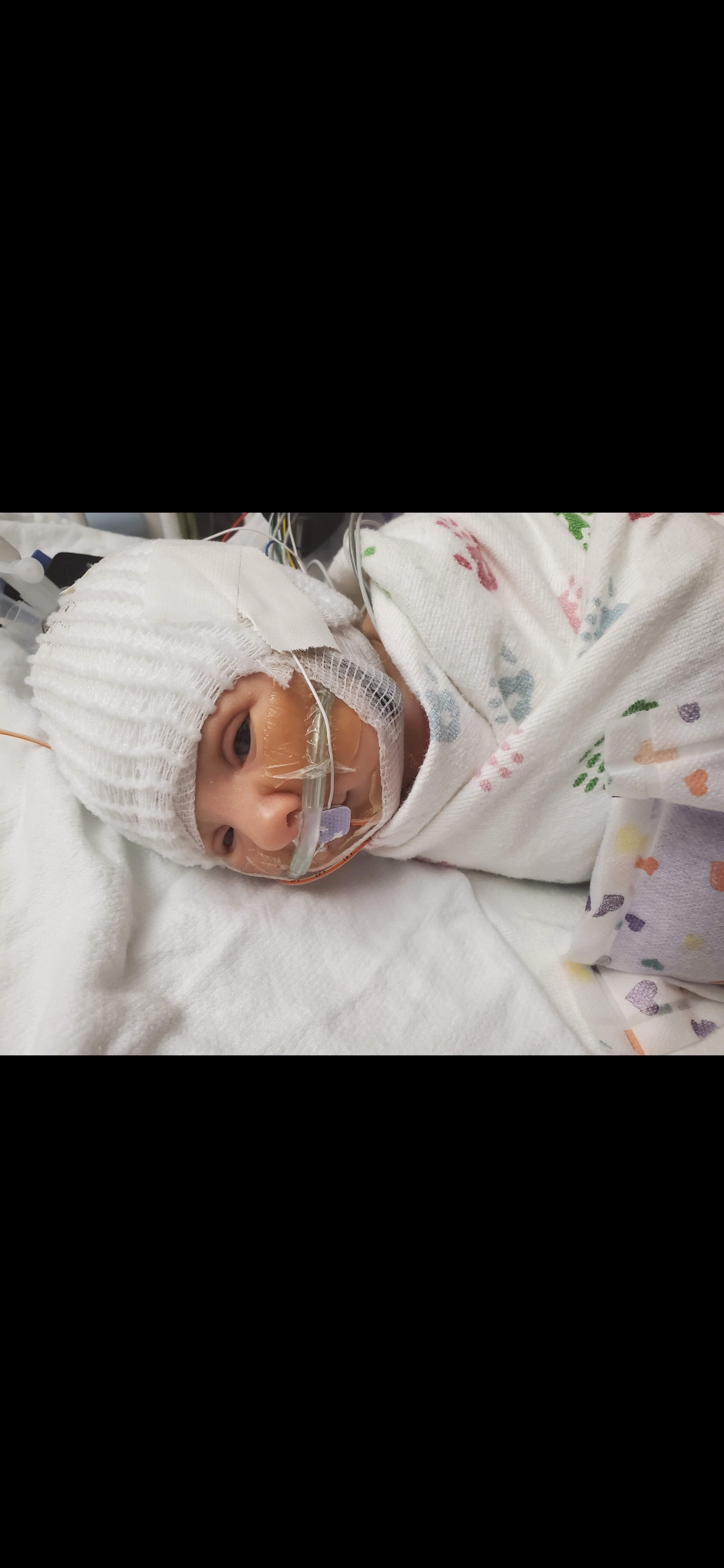
"Walking out of Patrick's room, not knowing if that would be the last time I held my son alive — we had no idea what was going on. And I couldn't even be there with Zach."
Anna JerzykFor the next several weeks, Zach and Anna alternated days at Patrick's bedside while Sophia and Ariana waited at home. No diagnosis. No certainty. Just the beeping of monitors and the reassurance of a care team they had not yet fully found.
The Transfer That Changed Everything
One nurse at their local hospital pulled Anna aside and said: you have two options — Lurie Children's downtown Chicago, or a hospital in Wisconsin. That single conversation set the course of Patrick's life.
Anna came home, and together they put their foot down. Patrick was transferred to Ann and Robert H. Lurie Children's Hospital of Chicago in a small transport incubator. Zach and Anna drove separately through a ghost-town version of downtown Chicago — empty streets, no traffic, the city completely still.
"The instant we walked in, we were greeted by a whole team of doctors. It was very much — what do you need? What do you think? We want to hear your thoughts. I was very important to Patrick's treatment."
Anna Jerzyk, on arriving at Lurie Children'sLurie Children's has been building one of the country's most comprehensive approaches to rare chromosome disorders, including Trisomy 9, Trisomy 18, and Trisomy 13. The Jerzyk family experienced that firsthand — a full team waiting, a care roadmap laid out, and a culture where parents are treated as partners rather than bystanders.
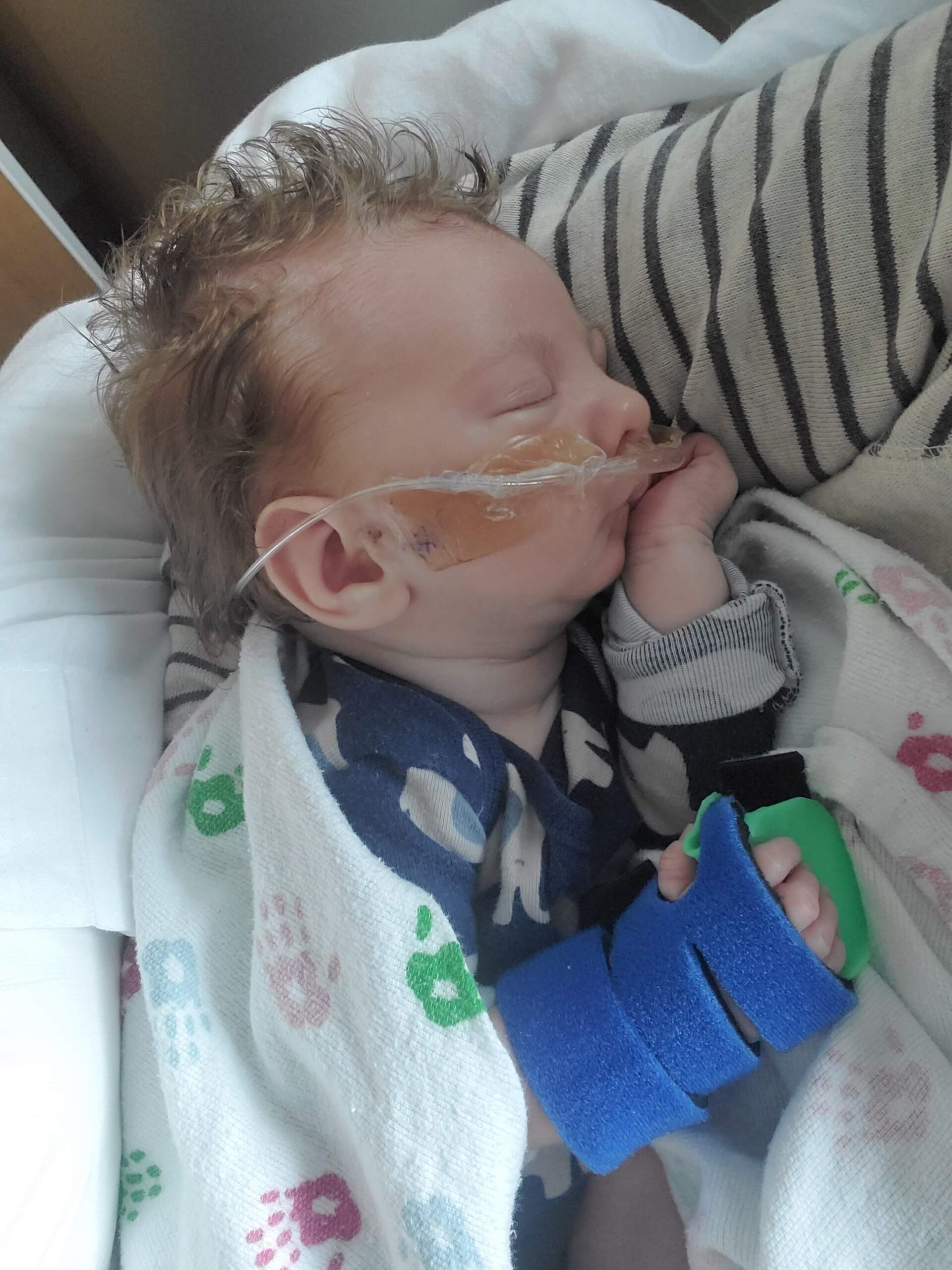
Patrick spent roughly six weeks at Lurie's — including his first Easter and first holiday away from home. He received a G-tube, oxygen support, a sleep study, and eventually his genetics workup. It took about two weeks for the test and another two to three weeks for results. Thirty days of not knowing.
The Trisomy 9 Diagnosis — "I Could Finally Breathe"
When the genetics team at Lurie's sat Zach and Anna down to share Patrick's results, they expected the worst. What they got instead was something unexpected: clarity without darkness.
"As soon as we got the diagnosis, honestly, I felt like I could breathe. It was a relief just to have an answer. It wasn't scary."
Anna JerzykZach echoed the same feeling. The genetics team delivered the news with positivity rather than doom — this is what Patrick has, here is what we found, here is the path forward. There was no looming sense of hopelessness. And then the doctor told them something that would change their lives: go online, go to Facebook, find the community.
Anna had almost deleted her Facebook account. Instead, she found a Trisomy 9 parent group where she saw children thriving, adults living full lives with Trisomy 9, and families who had walked the path ahead of them. "It didn't seem like a diagnosis anymore. It was like — okay, this is our new journey, and Patrick is going to be okay."
This is precisely why SOFT exists. The organization was founded by two parents calling each other on the phone, building connection one family at a time. Forty years later, that same principle holds — finding community transforms a diagnosis from an ending into a beginning.
Patrick at Almost Six: Cars, Magnets, and the Simpsons
Patrick communicates through sign language and is beginning to add spoken words. He is a quick learner — his teachers regularly find themselves surprised by what he already knows. He carries approximately 28 to 30 toy cars with him at any given time, often sneaking them into school in his sweater pouch. His family describes him as electric. Nick Holladay, who met Patrick at conference, agrees.
He also loves magnets, enjoys watching The Simpsons with his family, and has a gift for making people feel like they are exactly where they are supposed to be just by being in the room with him.
"Don't put a limit on your kids. The doctors said he might never walk. Okay — maybe he'll walk one day. He might talk one day. I just never put a cap on it."
Anna JerzykZach put it simply: Patrick sets the pace. He hits every milestone — just on his own timeline, and when he hits it, he hits it like he's been doing it forever.
What Patrick Has Taught His Sisters
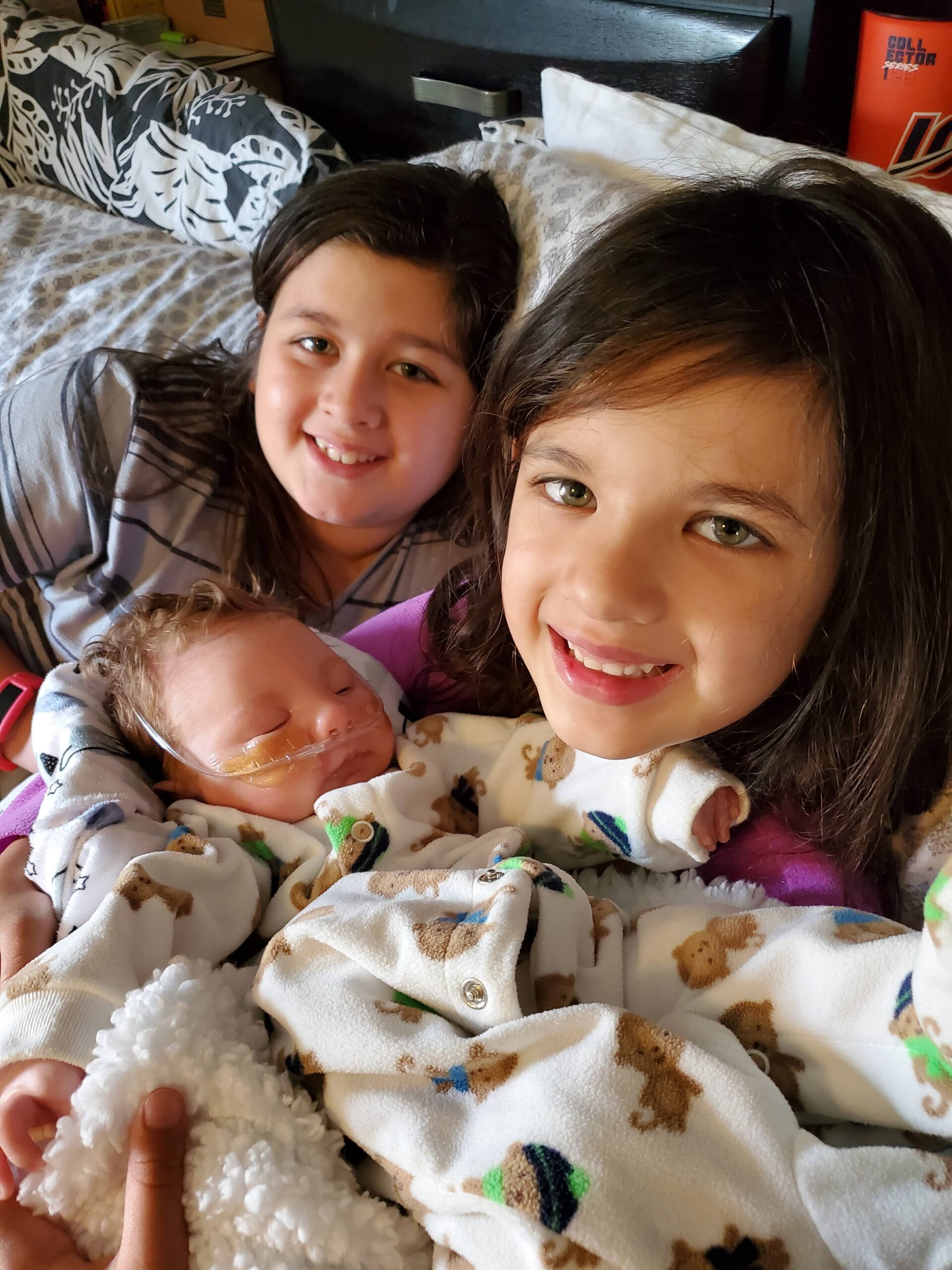
The Sibling Perspective
Sophia, almost 16, said it plainly on the podcast: "He made me a better person. Before Patrick, everything had to be a certain way. Living with him, I just started to see the better things in the world." She is now volunteering in her high school gym class with students who have special needs, walking the track with them and thinking seriously about a future in working with kids with disabilities.
Ariana, 12, remembered waiting at home during Patrick's NICU stay, constantly asking when he was coming home. Now she hangs out with him almost every day — doing homework together, watching TV, just being together.
Both girls have developed what Zach called a wider lens. They look beyond the surface. When they see someone struggling, their first instinct is not judgment — it is curiosity and empathy. They ask: what are they going through? How are they feeling?
"Mom, you never know what somebody else is going through. You never know how this person is feeling."
Sophia Jerzyk, age 15, on what Patrick has taught herUnderstanding Partial Trisomy 9P
Patrick has Partial Trisomy 9P — meaning there is an extra partial arm of the ninth chromosome present in all of his cells. This is distinct from Mosaic Trisomy 9, where the extra chromosome appears in only some cells, or Full Trisomy 9.
During Patrick's workup, Lurie's also tested Anna and Zach — and discovered that Anna carries a chromosomal translocation (two chromosomes that are swapped). This type of finding can explain how a partial trisomy occurs and is important information for families thinking about future pregnancies.
Patrick's geneticist at Lurie Children's is Dr. Lee, who is becoming one of the leading experts on Trisomy 9P in the country. For families navigating a Trisomy 9 diagnosis who are not near a major pediatric center, seeking a second opinion or genetic consultation from a specialist like Dr. Lee can be transformative.
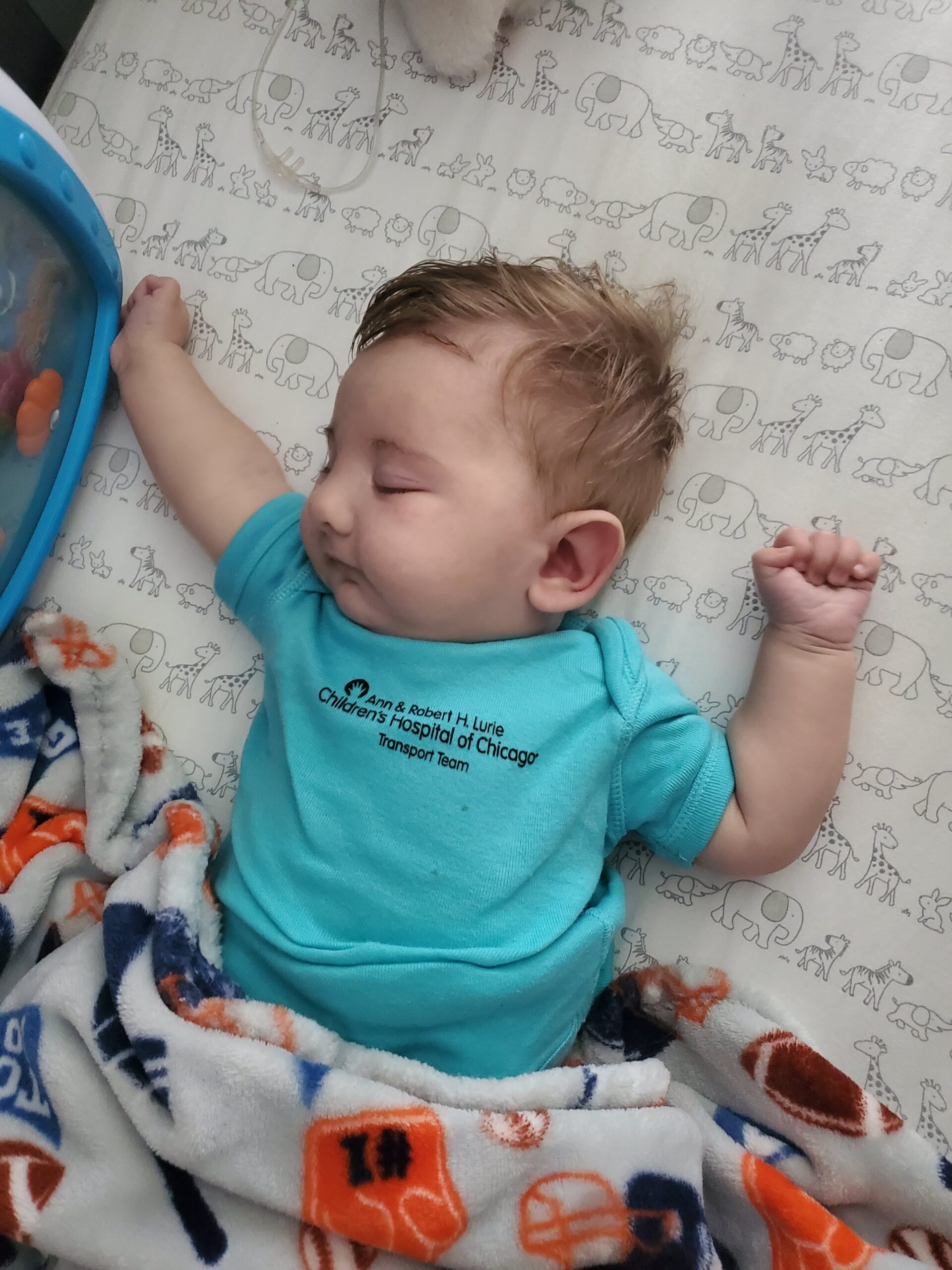
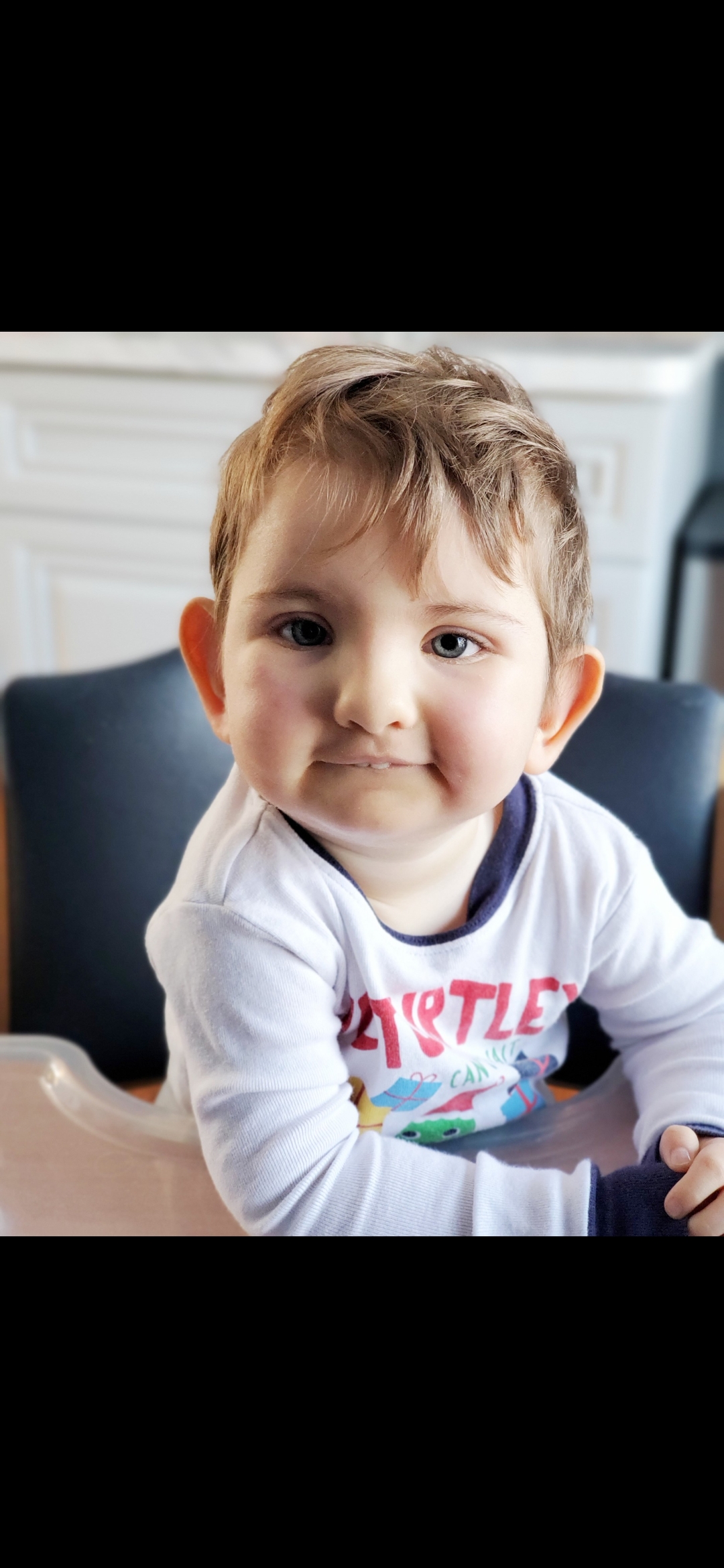
Patrick also has alopecia areata — an autoimmune condition unrelated to his Trisomy 9 diagnosis in which his body attacks its own hair follicles. He began losing his hair between ages two and three. Anna, a professional hairdresser, has channeled that experience into volunteering to give haircuts to children with sensory processing challenges who cannot tolerate traditional salon settings.
Advice from the Jerzyk Family for Trisomy 9 Families
- Join the Trisomy 9 Facebook community immediately — it is where real families share real experiences and children of all ages are represented
- Advocate loudly for a transfer to a major pediatric center if your local hospital does not have experience with rare chromosome disorders
- Do not put a ceiling on your child's potential — they set the pace, and they will surprise you
- Patience is everything. When they hit a milestone, they own it completely
- Share your child with the world. Educating a curious child in two minutes can change how they see people with disabilities for the rest of their life
- Reach out for support — SOFT, parent groups, and community exist precisely so you do not have to navigate this alone
Resources for Trisomy 9 Families
SOFT has published a Trisomy 9 New and Expectant Parent Book — currently in development — which will feature Patrick and his family alongside other Trisomy 9 children. Digital copies will be available at trisomy.org. Print copies will be available through Amazon and mailed directly to pediatric centers around the country.
Find Trisomy 9 Support at SOFT
Parent books, peer support, conference information, and community for families affected by Trisomy 9, Trisomy 18, Trisomy 13, and related rare chromosome disorders.
Visit trisomy.orgAbout SOFT and the Talking Trisomy Podcast
SOFT — the Support Organization for Trisomy 18, 13, and Related Disorders — is the leading nonprofit serving families affected by Trisomy 9, Trisomy 18 (Edwards syndrome), Trisomy 13 (Patau syndrome), and related rare chromosome disorders. With a national community of nearly 4,000 registered member families, SOFT provides peer support, educational resources, and an annual conference that brings families and clinicians together.
The Talking Trisomy podcast features family stories, clinician conversations, and advocacy discussions covering all things trisomy. Episodes are available on YouTube and Spotify. The 2026 SOFT 40th Annual Conference takes place in Loveland, Colorado in July 2026.
Join the SOFT Family at the Annual Conference
Families, clinicians, and the broader trisomy community come together each year to connect, learn, and support one another.
Learn More


Recent Comments