
Introduction
Families who receive a diagnosis like Trisomy 18 are often introduced to their child’s story through statistics, grim predictions, and assumptions about what life will—or will not—look like. Information is fragmented, perspectives are narrow, and hope is frequently framed as unrealistic. In this space of uncertainty, parents are left not only to make complex medical decisions, but also to decide which story they will believe about their child’s life. David Musser’s reflection invites us to reconsider the dominant narrative, grounding understanding not in abstract prognosis but in real relationship, real experience, and the profound meaning found in loving a child exactly as they are.
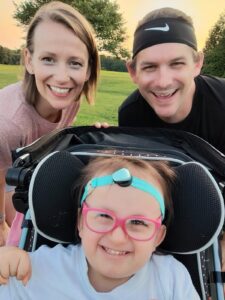
Izzie at 3 with her parents
Choosing the Life Narrative
In “Choosing the ‘Life Narrative’ For My Daughter Living With Trisomy 18,” David Musser reflects on how the stories parents and medical professionals tell about Trisomy 18 deeply influence outcomes, expectations, and care decisions. He contrasts the dominant Death Narrative—which frames Trisomy 18 as “incompatible with life” and assumes inevitable suffering and early death—with a *Life Narrative* that begins from the assumption that a child’s life has dignity, value, and potential meaning.
Musser argues that the Death Narrative often becomes a self-fulfilling prophecy. When death is assumed from the start, families may be discouraged from pursuing medical interventions, and clinicians may frame treatment as futile or cruel. These choices then reinforce grim statistics that were shaped by non-intervention in the first place. By contrast, the Life Narrative asks a different question: What care would we offer if we presumed life rather than death?
Drawing from his own experience as the father of Izzie, who has full Trisomy 18, Musser describes how his family chose to pursue full medical support, including surgeries and life-sustaining treatments. He emphasizes that this choice was not about denying hardship or guaranteeing outcomes, but about refusing to let hopelessness dictate care. Their decision allowed Izzie to live a life filled with joy, personality, connection, and love—qualities often absent from clinical descriptions of the condition.

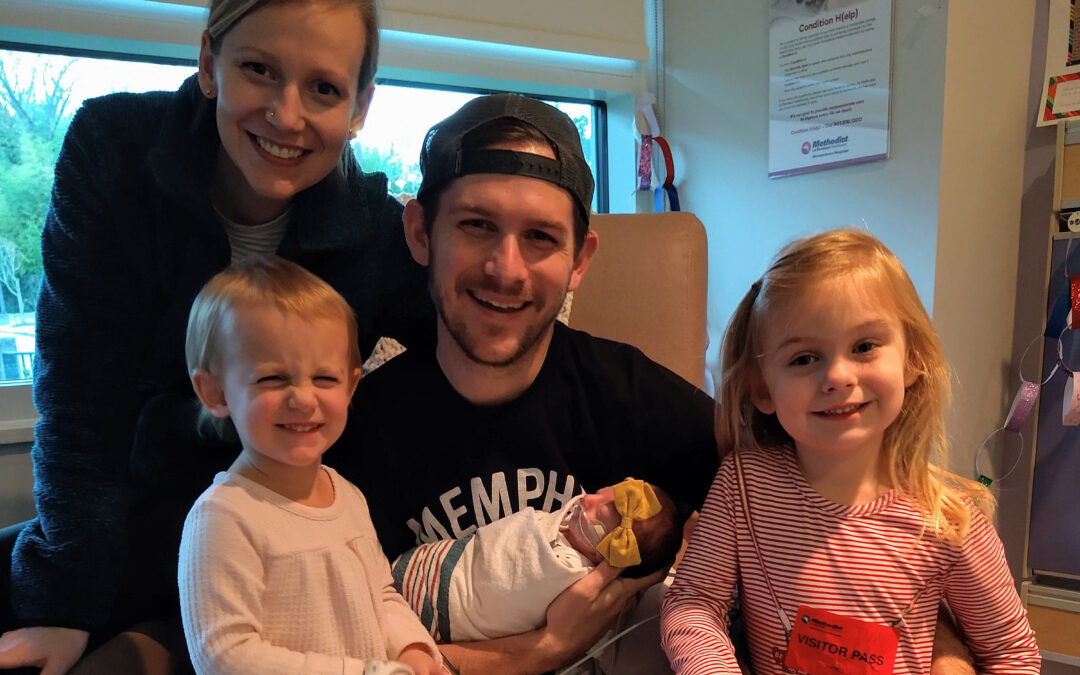
Izzie at 3 with her sisters
Embracing a Life Narrative for your Children
Musser challenges cultural and medical assumptions by pointing out that prognoses are based on population averages, not individual children, and that advances in medical care have already improved outcomes for some children with Trisomy 18. He notes parallels to how children with Down syndrome were once viewed, arguing that narratives can evolve.
Ultimately, Musser calls for honesty without despair. Embracing a Life Narrative does not erase suffering, but it allows families to see their children as fully human—capable of relationship, delight, and meaning—and worthy of care, hope, and love, however long or short their lives may be.
Here is the link to the full article posted on David’s blog.
















Recent Comments